

OUR CSR COMMITMENTS

At Cogelec, our CSR approach is not just a formality, but a genuine conviction. We place our employees, our customers and the environment at the heart of our commitment. It’s not just a question of innovation, but of innovation in the service of our customers, their safety and the home care of seniors. Together, as committed players, we are building a sustainable future for Cogelec, in France and in Europe.
Our CSR commitments
Our ethical charter

Our responsible purchasing charter
COGELEC is committed to CSR
Controlling the impact of our production on the environment
French production with local CAT subcontractors
French sourcing
Sustainability, a hallmark of our commitment to quality
More than just a requirement, customer satisfaction is a genuine part of our corporate culture, supported by employees committed to continuous improvement in order to fulfill our customer promise. On a daily basis, our teams ensure the quality and conformity of our products.
A sustainable offering to help protect the environment
Intratone is committed to reducing its carbon footprint by producing products that require no cables in the private areas of homes. With each new installation, 200g of plastic, 300g of electronics and 20m of cable are saved in each home.
REACH regulations
Sustainable development is based on standards. On June 1, 2007, the new European REACH regulation came into force. REACH stands for Registration, Evaluation and Authorisation of Chemicals. The French translation would be: système d’enregistrement, d’évaluation et d’autorisation des substances chimiques. REACH’s key objectives are to better protect human health and the environment against the risks that chemicals can pose. It also aims to improve knowledge of the chemical substances used by industry. The aim of this standard is to prevent the use of products that are toxic to health and the environment, and to replace them with harmless products.
REACH regulations apply to all industries and all materials on the European market, whether produced in or imported into the European Union in quantities of one tonne or more per year. It obliges companies to register their substances with the European Chemicals Agency, on pain of not being placed on the European market. However, registration does not apply to substances already covered by other regulations (radioactive substances, medicines, plant protection products, biocides, food additives, etc.). Other categories, such as polymers, are subject to special treatment.
WEEE and ROHS management
WEEE and RoHS management correspond to two European directives. The D3E (2002/96/CE), deals with the management of waste electrical and electronic equipment in Europe. The RoHS directive (2002/95/EC) (Restriction of Hazardous Substances) concerns the composition of electrical and electronic equipment (EEE). According to article R.543-172 of the French Environment Code, EEE is defined as equipment that operates by means of electric currents or electromagnetic fields, as well as equipment for the production, transfer and measurement of such currents and fields. This includes equipment designed for use at voltages not exceeding 1000 volts AC and 1500 volts DC.
One of the aims of these guidelines is to provide information on the rules to be followed and the means available for managing waste electrical and electronic equipment, in strict compliance with the principles of sustainable development. The guidelines also help to identify the needs and problems of users and service providers, as well as existing or future solutions. There are a number of approved “eco-organizations”, such as ECO-SYSTEMES, ECOLOGIC, ERP and RECYLUM. These organizations are created by and for producers, in partnership with all players in the sector. Their objectives are to ensure the economic management of the D3E sector, to organize the collection and processing of D3E and to set up awareness-raising, information and communication initiatives,
There is a difference between the D3E regulation and RoHS, in that the scope of the latter is more restricted. Unlike the D3E directive, the RoHS directive excludes medical devices (except implanted or infected products), monitoring and control instruments (smoke detectors, etc.), batteries and accumulators.
There are two categories of WEEE: household and professional. Household WEEE, as the name suggests, comes from households, as does similar equipment used for professional purposes, due to its nature and the channels through which it is distributed. Professional WEEE is equipment typically used by companies, such as vending machines, medical equipment or measuring instruments. Some equipment is similar to that used in households, but is still adapted to professional needs, such as supermarket display cases, mobile air conditioners or professional computer video screens.
WEEE is a highly varied type of waste, and its typical composition is far too complex to be fully defined. The collection and treatment of waste electrical and electronic equipment has been operational since November 15, 2006 for household WEEE. It has been operational for professional WEEE since August 13, 2005. It is based on the principle of extended producer responsibility for electrical and electronic equipment. This waste is essentially made up of ferrous and non-ferrous metals (10 to 85%), inert materials excluding cathode ray tubes (0 to 20%), plastics with or without halogenated flame retardants (1 to 70%), and specific components potentially hazardous to health and the environment (CFCs and other greenhouse gases). Nevertheless, many fractions of WEEE can be recycled, thus preserving natural resources and limiting the amount of waste sent to landfill or incineration.
The unique identifier FR025696_05BK47 attesting to registration in the register of producers of the EEE sector, in application of article L.541-10-13 of the Environment Code, has been allocated by ADEME to COGELEC SA (Siret code).
This identifier attests to the company’s compliance with its obligation to register with the register of producers of Electrical and Electronic Equipment.
and the completion of its marketing declarations to Ecosystème.
OUR SPONSORSHIP COMMITMENTS
At Cogelec, we believe in the power of collective action, boldness and local commitment. This is why we have set up a sponsorship and patronage policy to support initiatives that make sense for our employees and our region.
Sports sponsorship: supporting those who inspire us
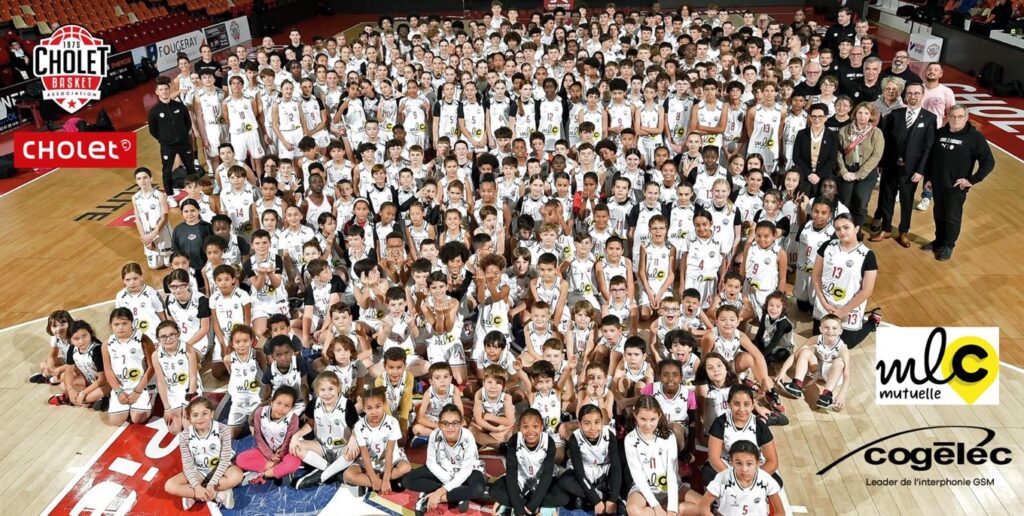
COGELEC supports a number of local sports associations and athletes:
– The Cholet Basket Association is a pillar of Cholet sports. It brings together the club’s amateur activities, alongside the professional Betclic Élite team.
– Amandine Brossier, a high-level sprinter, whom we support in her mental preparation and competitions, while promoting her testimonial to our teams.
– Les Dogs de Cholet, an ice hockey club playing in the 1st division.
Patronage: causes we care about
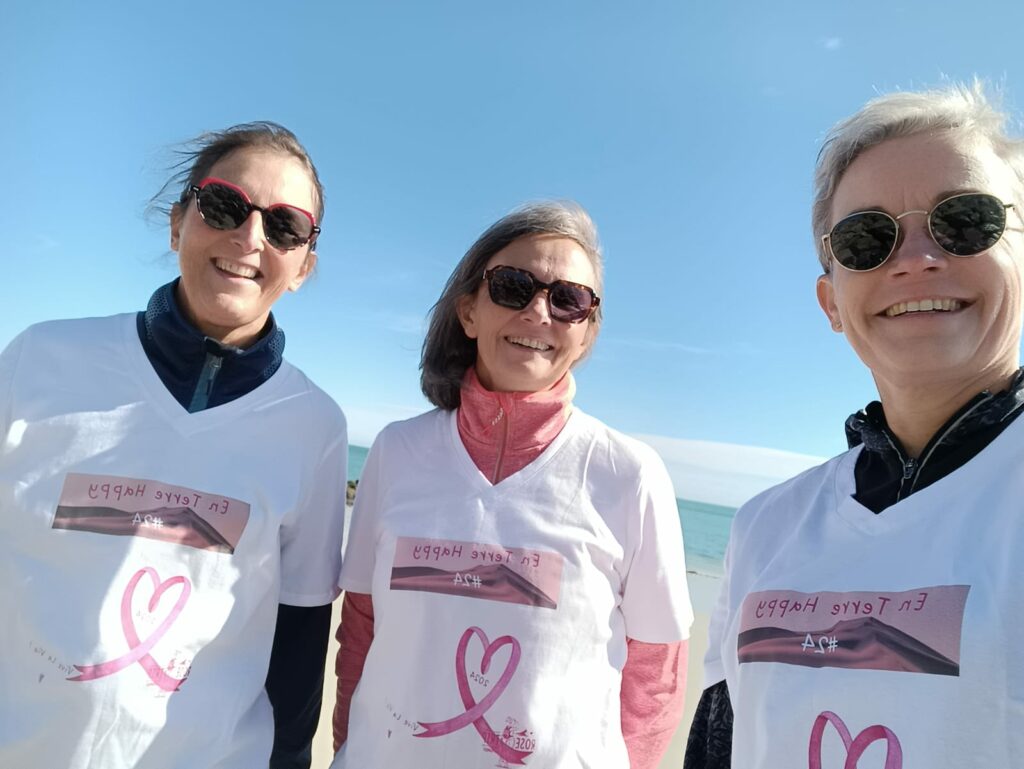
Cogelec supports and encourages the Les Roses trips Maroc association. This 100% women’s eco-solidarity orienteering race in the heart of the Moroccan desert aims to support the fight against breast cancer, publicize the participating associations and raise funds to help research.
We also support the association Les Sourires de la Digue, which enables cancer sufferers to benefit from the services of a socio-beautician at the Montaigu hospital.